
Brand Impersonation: The 7 Channels Attackers Use to Clone Your Business
Your brand is not just a logo. It is the trust your customers extend when they see your name, your colours, your domain. Attackers know this. So they clone all of it — and use your own reputation as the weapon against the people who rely on you.
Here is the uncomfortable part. Most companies never see it happen. The fake login page, the rogue app, the counterfeit storefront — they go live, harvest credentials or payments, and disappear before anyone on the inside notices. Strong brand impersonation protection is not about reacting to complaints. It is about finding the clone before your customer does.
This article walks the seven channels attackers actually use, with concrete illustrative examples, and explains why speed of detection and takedown is the whole game.
Why Brand Impersonation Is Exploding
Three forces have made impersonation cheap, fast, and low-risk for the attacker.- The toolkit is commoditised. Phishing kits that perfectly mimic a bank or e-commerce login are sold ready-made. No coding required. Some now defeat MFA by relaying session cookies in real time.
- Trust is the soft target. Patching servers is hard. Spoofing a brand customers already trust is easy — and far more effective. The attacker borrows credibility you spent years building.
- The window stays open too long. The average abuse campaign runs for roughly 72 hours before detection, and most impersonation is never caught by the victim company at all. That is days of harvesting, and the brand wears the blame.
The 7 Channels Attackers Use
Impersonation is not one threat. It is a portfolio. Defend one channel and attackers simply move to the next.1. Lookalike Domains and Typosquats
The oldest trick, still the most effective. Attackers register domains that read like yours at a glance:your-c0mpany.com (zero for the "o"), yourcompany-finance.com, or yourcompany.com.co. These host phishing pages, send spoofed invoices, or front BEC fraud. A customer skims the address bar, sees roughly the right word, and types in their password.
2. Fake Social Media Accounts
Attackers spin up profiles impersonating your brand, your executives, and your support team. A fake "support" account replies to anyone complaining about your service and offers to "help" — then collects card details. A cloned executive profile messages staff or customers with urgent requests. The logo is yours. The account is not.3. Rogue Mobile Apps
A malicious APK carrying your brand and icon gets distributed through third-party stores, ads, or links. Installed, it overlays a fake login screen on top of legitimate apps — the classic banking-trojan overlay — and captures credentials and one-time passwords as the victim types them. Your customer believes they are using your app. They are feeding an attacker.4. Malicious Ads and SEO Poisoning
Attackers buy ads on your own brand keywords, so a paid result for "yourbank login" points to a phishing site sitting above your real one. SEO poisoning does the same organically, planting fake pages that rank for your name. The customer searched for you and trusted the top result. That trust is exactly what gets harvested.5. Counterfeit E-commerce Storefronts
On marketplaces like Shopee, Lazada, and Amazon, attackers stand up storefronts using your brand, product photos, and copy to sell counterfeits — or to take payment and ship nothing. Customers receive fakes or get defrauded, then leave angry reviews on your official channels for a transaction you never touched.6. Dark Web Forums Selling Phishing Kits
Before the fake page ever appears, the kit to build it is often already for sale. Dark web and underground forums trade ready-made phishing kits tailored to specific brands, complete with cloned templates and credential-capture built in. Spotting your brand named in these markets is an early warning — the attack is being assembled before it launches.7. Telegram and Discord Fraud Channels
Closed messaging channels on Telegram and Discord have become busy fraud bazaars. Operators sell stolen accounts, advertise scams using your name, coordinate campaigns, and distribute kits and stolen data. These spaces move fast and stay out of public view — which is exactly why they so often go unseen by the brand being abused.The Cost of Inaction
Every channel above shares one trait: the damage lands on your customers, but the reputation damage lands on you.- Direct fraud loss. Customers lose money to fake pages, apps, and storefronts trading on your name.
- Credential and session theft. Harvested logins feed account takeover. Infostealer malware compounds this by quietly exfiltrating saved passwords and active session cookies — read our guide on infostealer malware for how that pipeline works.
- Eroded trust. Once customers are burned by something wearing your brand, they hesitate at your real channels too.
- Regulatory exposure. For BFSI, customer-facing fraud invites questions from regulators and can put RMiT alignment under the microscope.
How Takedowns Work — and Why Speed Matters
A takedown is the formal process of getting a malicious asset removed at its source: the registrar suspends the lookalike domain, the platform pulls the fake account or storefront, the host kills the phishing page, the app store delists the rogue APK.The mechanics are well understood. The hard part is doing it fast, repeatedly, across every channel.
- Detection first. You cannot take down what you have not found. Continuous monitoring across domains, social, marketplaces, app stores, the dark web, and chat channels is the prerequisite.
- Evidence and routing. Each provider needs the right proof sent through the right abuse channel. Done manually, this is slow and inconsistent.
- Speed is the metric that matters. A clone removed in hours harms far fewer customers than one that lingers for days. Flawtrack averages under 8 hours to take down a malicious domain — measured against that 72-hour industry detection window, that is the difference between an incident and a near-miss.
Why Continuous Brand Monitoring Beats Manual Checks
Plenty of teams "check" for impersonation. Someone searches their brand name now and then, glances at the marketplaces, sets a Google Alert. It feels like coverage. It is not.Manual checks fail for structural reasons:
- They are periodic; attacks are constant. A weekly check leaves a week-long blind spot. The campaign is over before your next look.
- They cannot reach the dark corners. Underground forums and closed Telegram and Discord channels are invisible to a casual search.
- They do not scale across seven channels. No analyst can watch every typo permutation, every marketplace, every store, every chat channel, 24/7.
This is what brand impersonation protection looks like in practice: full visibility across every channel an attacker can clone, with zero blind spots — and the speed to act before the damage is done.
FAQ
What is brand impersonation in cybersecurity?
Brand impersonation is when attackers copy your brand — your name, logo, domain, app, or storefront — to deceive your customers or staff. The goal is usually to steal credentials, harvest payments, or commit fraud, all while your reputation absorbs the blame.How long does brand impersonation usually go undetected?
The average abuse campaign runs for roughly 72 hours before detection, and most impersonation is never caught by the victim company at all. That window is why continuous monitoring matters: the faster you find a clone, the fewer customers it reaches.Can a fake domain or account actually be removed?
Yes. A takedown gets the malicious asset removed at its source — the registrar, host, platform, or app store. Speed is everything: Flawtrack averages under 8 hours to take down a malicious domain, well inside the typical detection window.See What's Hiding Behind Your Brand
Attackers may already be cloning you across some of these seven channels right now. The only way to know is to look across all of them — continuously.Request a demo and we will show you what is impersonating your business across lookalike domains, social media, mobile apps, ads, marketplaces, the dark web, and fraud channels — and how fast Flawtrack shuts it down.
Full Visibility. Zero Blind Spots.
END_OF_FILE
HASH: HALST50HVND
Related Intelligence
Why Executives Are the #1 Target: A Guide to Executive Protection in Cybersecurity
Executive protection cybersecurity explained: why attackers target the C-suite, the four vectors they use, and how to monitor VIP credentials.
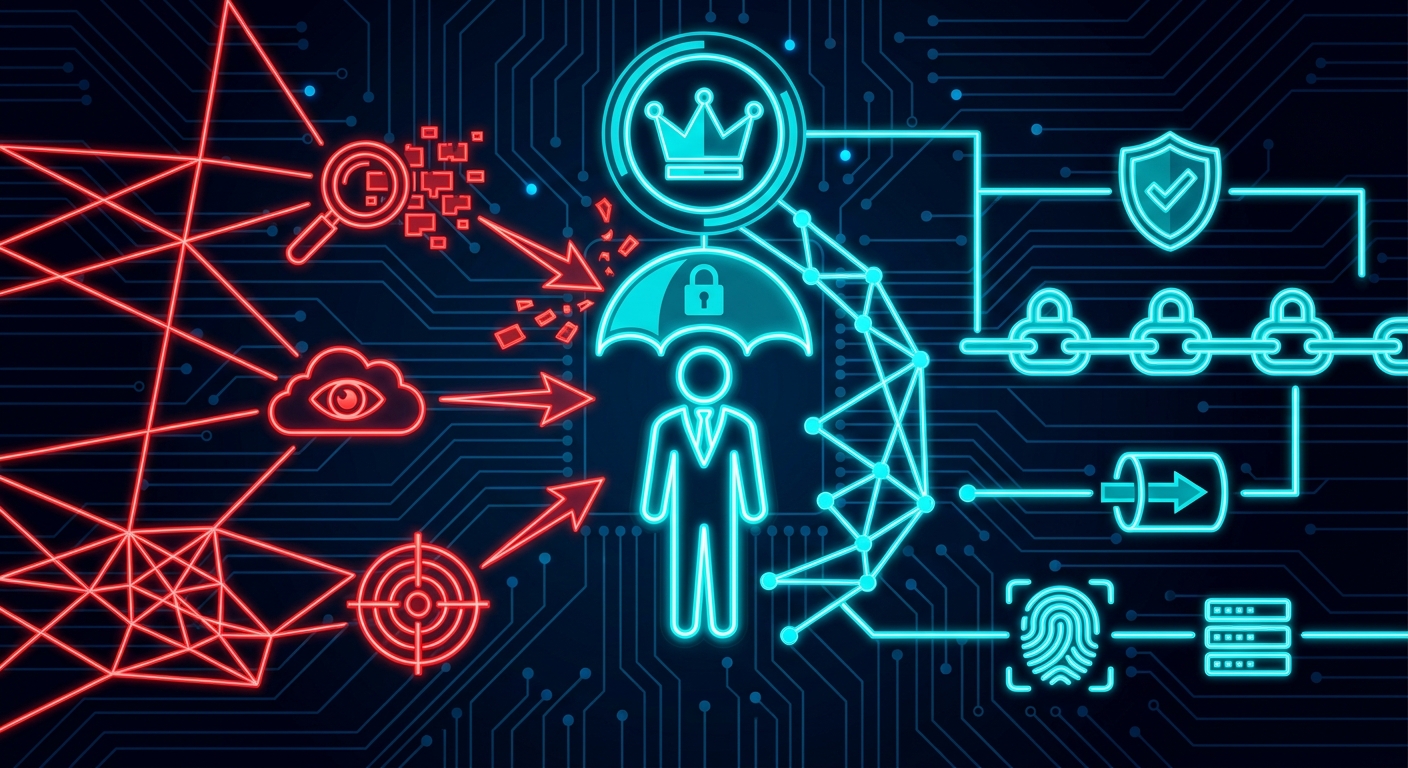
Why Executives Are High-Value Targets — And What to Do About It
Social engineering, credential theft, and AI deepfakes — your C-suite is the #1 attack surface. Here's why attackers target executives and how to protect them.
Google Ends Dark Web Reports
Google is shutting down its Dark Web Report tool, citing a lack of actionable insights. Discover what this means for your security and why it's a critical moment for organizations.
Ready to Secure Your Infrastructure?
Join forward-thinking engineering teams who trust Flawtrack for continuous vulnerability scanning and threat detection.
Get Started Now